


A Competitive Breakdown of the Global Independent Software Vendors Market Share

The global market for third-party software is a vast, sprawling, and incredibly fragmented landscape, making a simple analysis of Independent Software Vendors Market Share a complex undertaking. Unlike hardware markets that can be dominated by a few key players, the ISV world is characterized by a "long tail" of thousands of companies, each with its own niche and customer base. There is no single ISV that commands a majority share of the overall market. Instead, market share is best understood by looking at specific software categories and customer segments. The competitive dynamics in the market for enterprise ERP systems are vastly different from those in the market for SMB collaboration tools. The overall market is a mosaic, composed of a few "mega-ISVs" who have become platforms in their own right, a vibrant and highly competitive mid-market, and an enormous and diverse base of smaller, specialized vendors, all competing for a slice of the multi-trillion-dollar global software pie.
At the very top of the market are a handful of companies that started as ISVs but have grown so large and influential that they are now massive software platforms themselves. Companies like Salesforce, Adobe, and Intuit are prime examples. Salesforce, which began as a cloud-based CRM ISV, has expanded into a comprehensive customer success platform and, through its AppExchange marketplace, has become a foundational platform for thousands of other ISVs to build upon. Adobe transformed itself from a vendor of desktop creative software (like Photoshop) into a dominant force in digital marketing and experience management with its cloud-based Adobe Experience Cloud. These mega-ISVs hold a massive share of the revenue in their respective domains and are increasingly competing directly with the traditional enterprise software giants like Oracle and SAP. Their success demonstrates the incredible potential for a focused ISV to grow into a market-defining behemoth through continuous innovation and strategic acquisitions.
The middle of the market is where much of the most dynamic competition takes place. This segment is populated by a host of highly successful, often publicly traded, pure-play SaaS companies that have achieved significant market share in specific, high-growth categories. In the collaboration and development space, Atlassian (with products like Jira and Confluence) has become an essential part of the modern software development toolkit. In the marketing and sales space for SMBs, HubSpot has built a multi-billion-dollar business by offering an easy-to-use, all-in-one platform. In the communication space, companies like Zoom and Slack (now part of Salesforce) completely redefined their respective categories. These companies have achieved their market share through a relentless focus on product-led growth, creating products that are so good and so easy to adopt that they spread virally within and between organizations. They represent the new guard of enterprise software, challenging the old, sales-led models of the legacy giants.
The base of the market pyramid consists of the enormous and ever-growing "long tail" of tens of thousands of smaller, often privately-held ISVs. These companies are the true engines of niche innovation. They may be a small team building a highly specialized compliance software for a specific sub-sector of the financial industry, or a startup creating a unique data visualization tool. While the market share of any single one of these companies is tiny, their collective share of the overall market is immense. They are also the primary source of innovation and the main feedstock for the industry's vibrant merger and acquisition (M&A) activity. The larger platform players and mega-ISVs are constantly acquiring these smaller innovators to quickly enter new markets, acquire new technology, or eliminate a potential competitor. This constant cycle of startup creation, growth, and acquisition is a defining characteristic of the ISV market and the primary mechanism through which market share is consolidated and reshuffled over time.
Explore More Like This in Our Reports:
Категории
Больше
The market research for the global Respiratory Pathogen Testing Kits market is an accumulation of first-hand facts and quantitative and qualitative evaluation and analysis for the forecast period (2024-2032). The report offers a comprehensive assessment of macro-economic indicators, parent market trends, and several factors influencing the market dynamics. In addition, it also...

Introduction If you're looking for a fun, educational, and interactive experience for kids during the school holidays, the Walkabout Reptile Show at Canterbury League Club, Sydney is a must-attend event. This exciting wildlife presentation brings children face-to-face with some of Australia’s most fascinating reptiles while teaching them about conservation, habitats, and animal safety in...

The latest business intelligence report released by Polaris Market Research on UK Glamping Market Share, Size, Trends, Industry Analysis Report, By Accommodation Type (Treehouses, Yurts, Cabin & Pods, Tents); By Age Group (18-32 Years, 33-50 Years, 51-65 Years); Segment Forecast, 2024- 2032. It covers the in-depth knowledge of the UK Glamping Market Share that includes opportunities,...

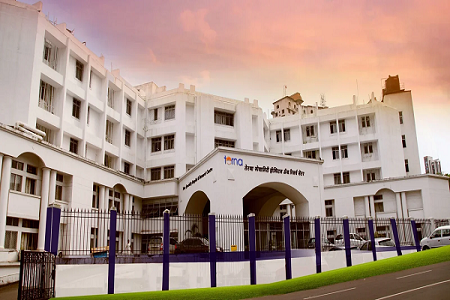
Expert Orthopaedic Care by Dr. Muzammil Shiraz Shaikh at Terna Hospital Navi Mumbai for Joint and Bone Health When it comes to bone, joint, and musculoskeletal health, choosing the right specialist is crucial. Dr. Muzammil Shiraz Shaikh, a highly experienced Orthopaedic Specialist at Terna Speciality Hospital & Research Centre, is known for delivering advanced and patient-focused orthopedic...
The Traction Equipment market report provides an in-depth analysis of the global Traction Equipment market, comprising the overall market synopsis, classifications, applications, definitions, and industry chain structure. The report will offer significant insight while shedding light on the key players [comprise Alstom SA, ABB Ltd., Bombardier Inc., American Traction...
