


Deconstructing the Architecture of the Modern Business Intelligence Market Platform
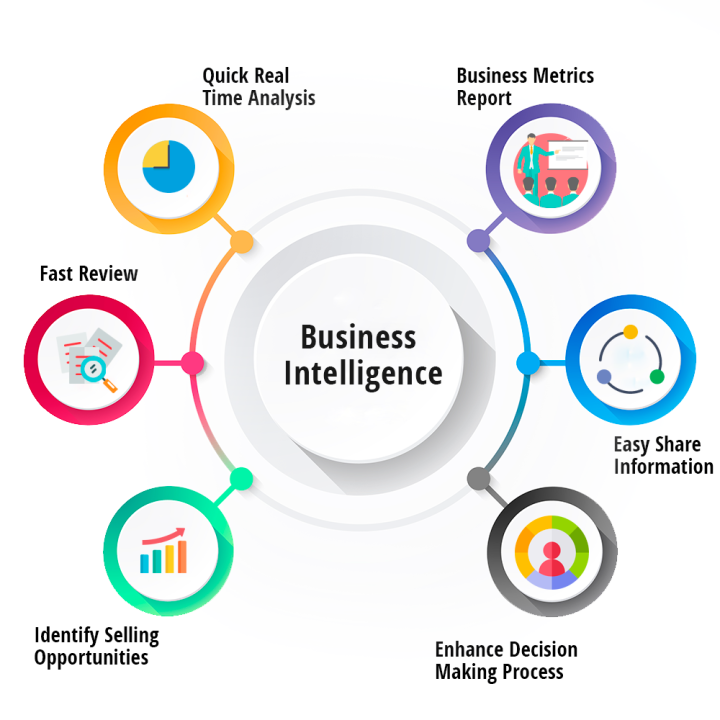
A modern Business Intelligence Market Platform is not a single piece of software but rather a comprehensive, integrated ecosystem of tools and technologies designed to support the entire data-to-insight lifecycle. This architecture can be visualized as a multi-layered stack, with each layer performing a specific set of functions to transform raw, disparate data into actionable business intelligence. At the foundation of this stack is the data source layer, which encompasses the vast array of systems where organizational data originates. This includes internal sources like transactional databases, CRM and ERP systems, and unstructured data from documents and emails, as well as external sources like social media feeds, market data providers, and public datasets. The primary challenge at this layer is the sheer diversity of data formats and locations. The goal of the BI platform is to provide a unified framework that can connect to, ingest, and process this heterogeneous data, creating a solid foundation upon which all subsequent analysis is built. The robustness and flexibility of a platform's data connectivity capabilities are, therefore, a critical determinant of its overall effectiveness.
The next crucial layer in the BI architecture is the data management and integration layer. This is where the "heavy lifting" of data preparation takes place. Raw data from the source layer is rarely in a state that is suitable for analysis; it is often incomplete, inconsistent, and full of errors. The core process here is Extract, Transform, and Load (ETL), or its modern variant, Extract, Load, and Transform (ELT). In this stage, data is extracted from its source systems, transformed into a consistent format by cleaning it, applying business rules, and standardizing values, and then loaded into a central repository. This repository is typically a data warehouse, which is a relational database specifically designed for analytical querying and reporting. Increasingly, organizations are also using data lakes, which can store vast amounts of raw data in its native format, providing more flexibility for advanced analytics. This integration layer is the backbone of the entire BI platform, as it is responsible for creating the clean, reliable, and consolidated "single source of truth" that is essential for trustworthy analysis and reporting. Without a robust data management layer, any insights derived would be built on a foundation of "garbage in, garbage out."
Sitting on top of the prepared data is the analytics layer, which is the engine of the BI platform where data is turned into information and knowledge. This layer contains a diverse set of analytical tools and techniques designed to answer different types of business questions. A fundamental component is Online Analytical Processing (OLAP), which allows for the rapid, multi-dimensional analysis of data. OLAP cubes enable users to "slice and dice" data, "drill down" into details, and "roll up" to see summaries, providing a highly interactive way to explore large datasets. This layer also includes capabilities for generating standard, formatted reports that can be scheduled for regular distribution. More advanced BI platforms extend this layer to include predictive analytics and data mining capabilities, which use statistical algorithms and machine learning techniques to identify patterns, make forecasts, and predict future outcomes. For example, a retailer might use predictive analytics to identify customers who are at high risk of churning. The power of the analytics layer lies in its ability to provide a spectrum of capabilities, from basic reporting and ad-hoc querying to sophisticated predictive modeling, catering to users with varying levels of analytical skill.
The final and most visible layer of the BI platform is the presentation layer, which is the interface through which business users interact with the data and consume the insights. This layer is entirely focused on making complex data understandable, accessible, and actionable for a non-technical audience. The most prominent feature of the modern presentation layer is the interactive dashboard. A dashboard provides an at-a-glance view of key performance indicators (KPIs) and critical business metrics, using a variety of data visualizations such as charts, graphs, gauges, and maps. The key to a modern dashboard is interactivity; users can click on any element to filter the entire view, drill down into the underlying data, and explore relationships between different metrics. This layer embodies the principles of self-service BI, providing users with intuitive, drag-and-drop interfaces to create their own reports and visualizations without needing IT assistance. The presentation layer also increasingly includes features for data storytelling, where users can assemble a sequence of visualizations and narratives to present a compelling, data-backed story to their colleagues. This focus on visualization and usability is what ultimately makes the power of BI accessible to the entire organization.
Top Performing Market Insight Reports:
Facility Management Services Market
Categorii
Citeste mai mult
A thorough strategic analysis of the private cloud services market reveals an industry with unique and defensible strengths, but one that must continuously innovate to fend off competition from the public cloud and address its own inherent complexities. The market's most significant and enduring strength is the superior level of security, control, and data privacy it offers. A...

A healthy smile does more than make you look great—it boosts your confidence, improves your overall health, and makes lasting impressions. If you’re living in or around Long Beach, finding the best Long Beach dentist is the first step toward maintaining that perfect smile. With so many dental professionals in the area, choosing one that fits your needs can seem...

The market research for the global PCR Technologies market is an accumulation of first-hand facts and quantitative and qualitative evaluation and analysis for the forecast period (2024-2032). The report offers a comprehensive assessment of macro-economic indicators, parent market trends, and several factors influencing the market dynamics. In addition, it also assesses the latest...

The market research for the global Smart Water Metering market is an accumulation of first-hand facts and quantitative and qualitative evaluation and analysis for the forecast period (2024-2032). The report offers a comprehensive assessment of macro-economic indicators, parent market trends, and several factors influencing the market dynamics. In addition, it also assesses the...

Polaris Market Research has introduced the latest market research report titled Pyrophyllite Market Share, Size, Trends, Industry Analysis Report, By Type, By Application (Ceramics, Refractories & Foundries, Fillers), By Region, And Segment Forecasts, 2024 - 2032 that highlights the major revenue stream for the forecast period. The report contains clear, reliable, and...